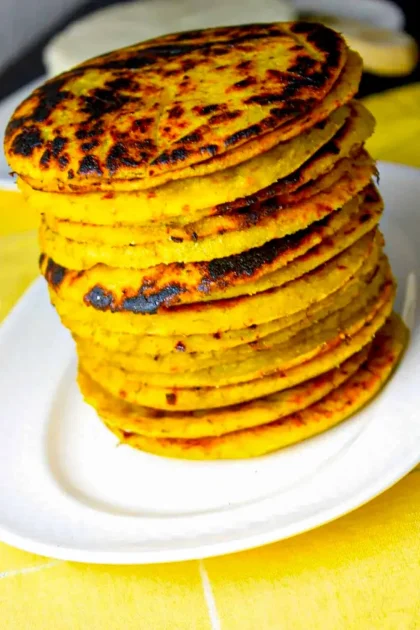
These colored arepas are made just like traditional Venezuelan arepas, except instead of water you use carrot, beet or cilantro juice — and they’re ready in 30 minutes. They’re vibrant, nutritious and gluten-free, and once you try them, you’ll never want to make them any other way.
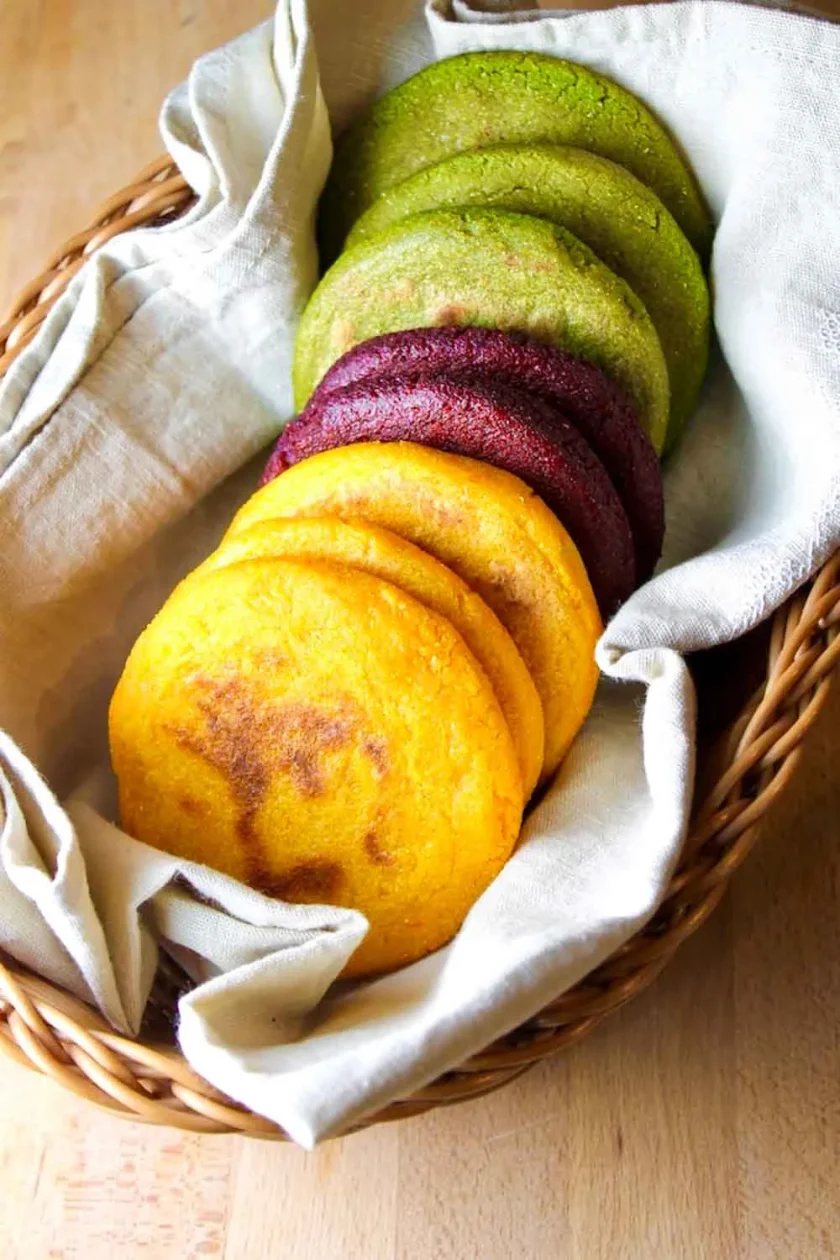
The trick is in the ratio: slightly more liquid than in a traditional arepa to compensate for the fiber in the vegetables. The result is a soft, pliable dough with a color that wins you over before the first bite.
As a member of the Amazon Affiliate Program and other affiliate programs, I receive compensation for products sold through the affiliate links in this post at no cost to the buyer.
Colored arepas: a gift from my Aunt Nanny
I learned to make beet arepas, carrot arepas and spinach arepas from my Aunt Nanny — the most indulgent of all my mother’s sisters.
At the time I was still living in Miami, and Aunt Nanny came to visit with my cousin Adriana and her granddaughter Sophia. We spent a family weekend together in Marco Island. And I asked my aunt to make colored arepas.
Aunt Nanny was the daughter of my grandmother Ligia — who made arepas every single day of her life, for as long as she was on her feet. So she also made arepas the right way. First she’d seared them on a griddle or budare. Then she’d finish them in the oven until they puffed up.
I used to skip that last step — but with age comes wisdom, and the truth is that arepas finished in the oven cook more evenly and never come out raw in the center.
Let’s get to it!
Enri

What are colored arepas and why are they worth making?
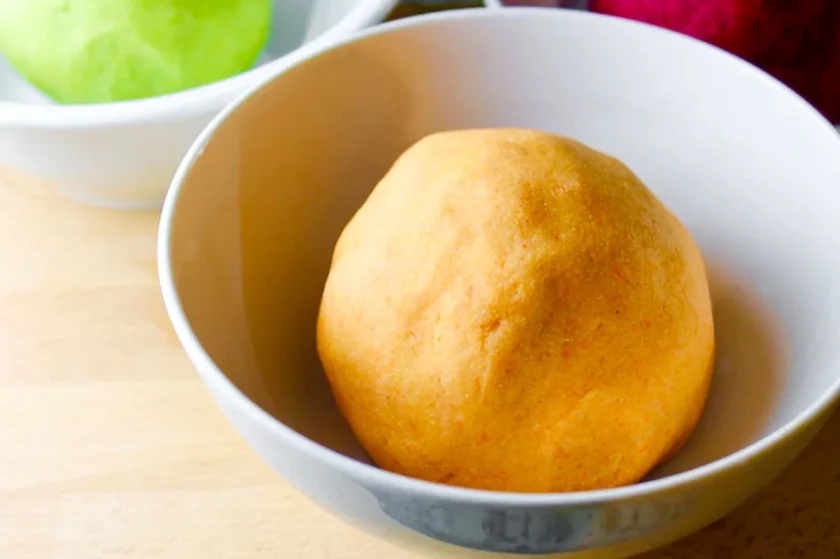
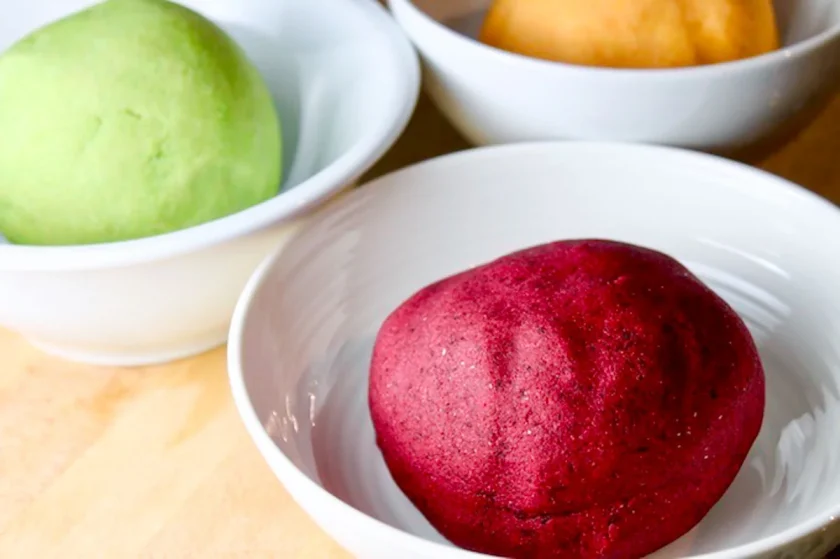
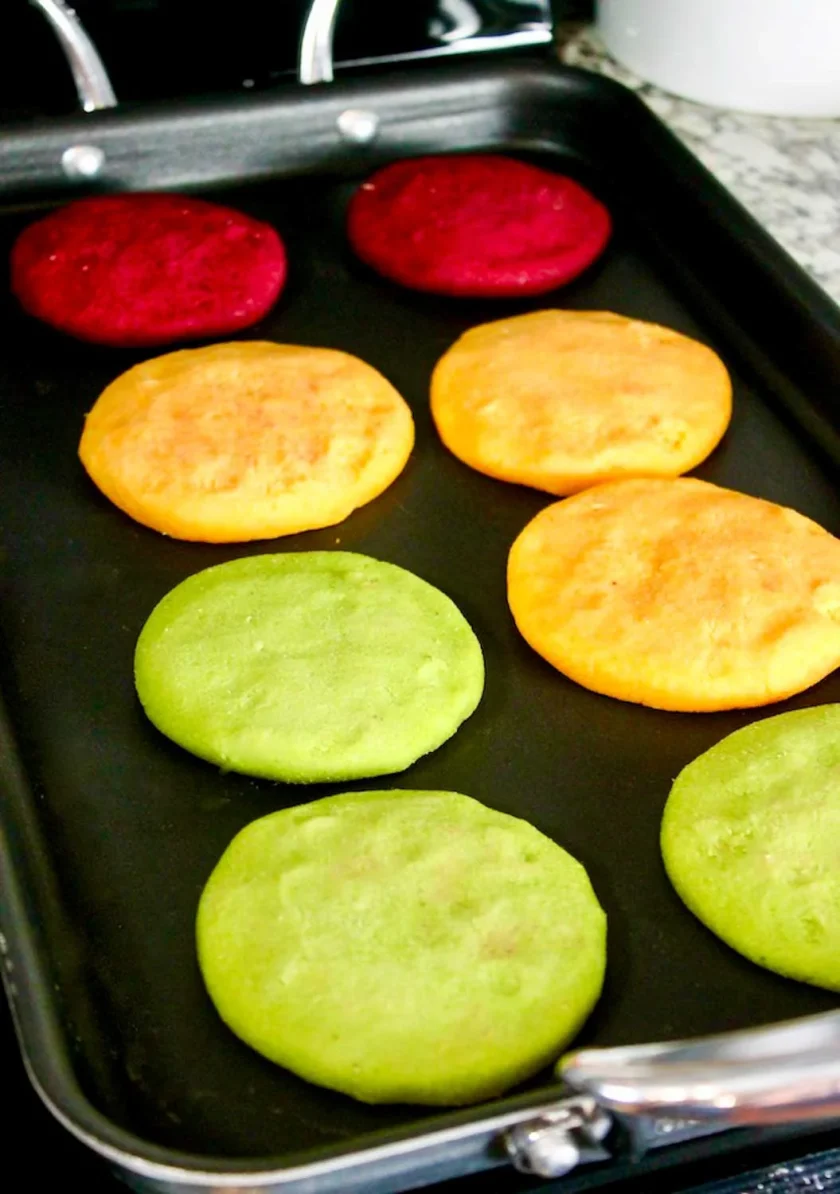
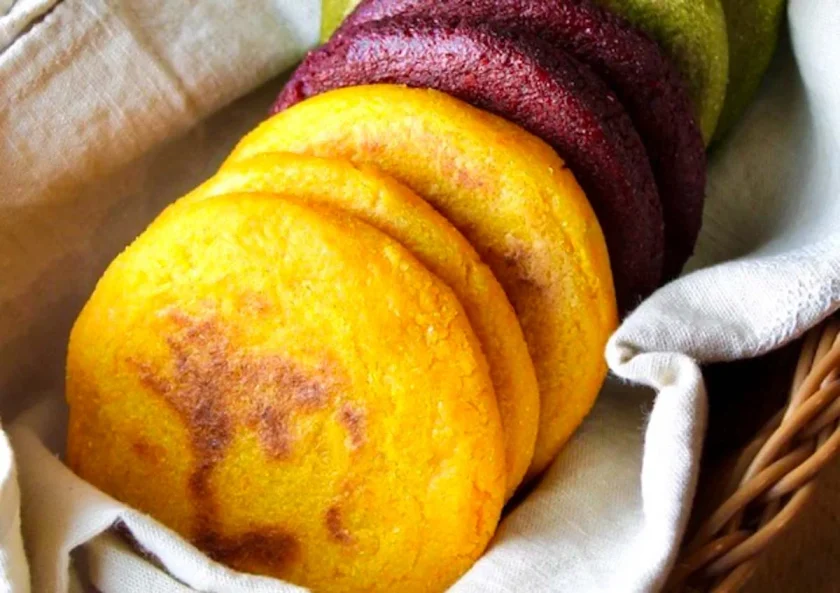
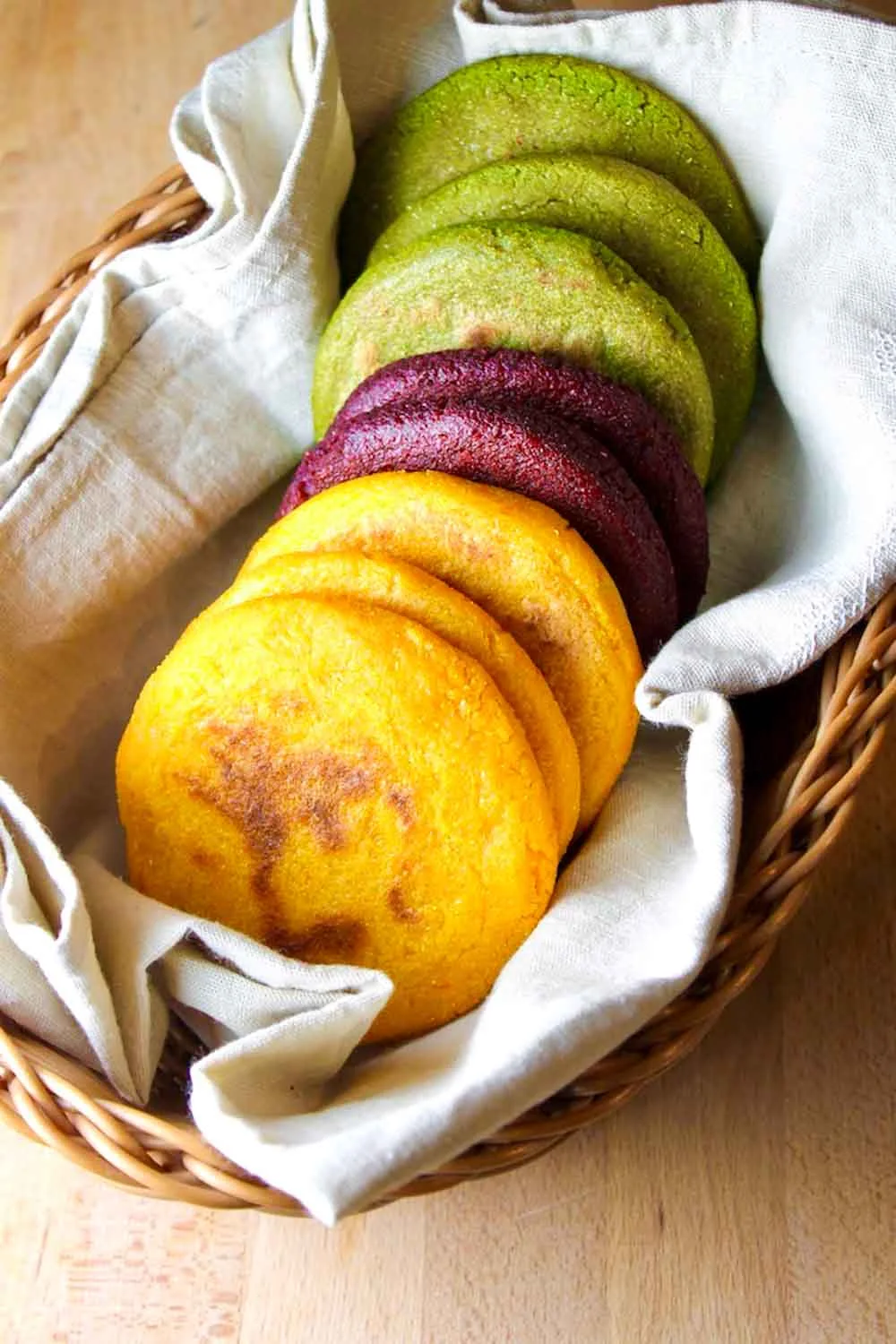
Colorful arepas are a variation of the traditional Venezuelan arepa where water is replaced by the natural juice of vegetables like carrot, beet or cilantro. The result is an arepa with spectacular colors — orange, fuchsia and green — with a slightly sweet or herbal flavor depending on the vegetable, and far more nutritional value than a plain white arepa.
They’re perfect for getting more vegetables into the whole family’s diet — especially little ones, who won’t even notice they’re eating beets or carrots. And since they’re naturally gluten-free, they work for almost any table.
Ingredients
- Harina P.A.N. (precooked arepa flour)
- Fresh carrots
- Fresh beets
- Fresh cilantro (stems included)
- Water
- Salt
Exact amounts are in the recipe card at the bottom of this post.
How to Make Veggie-Colored Arepas
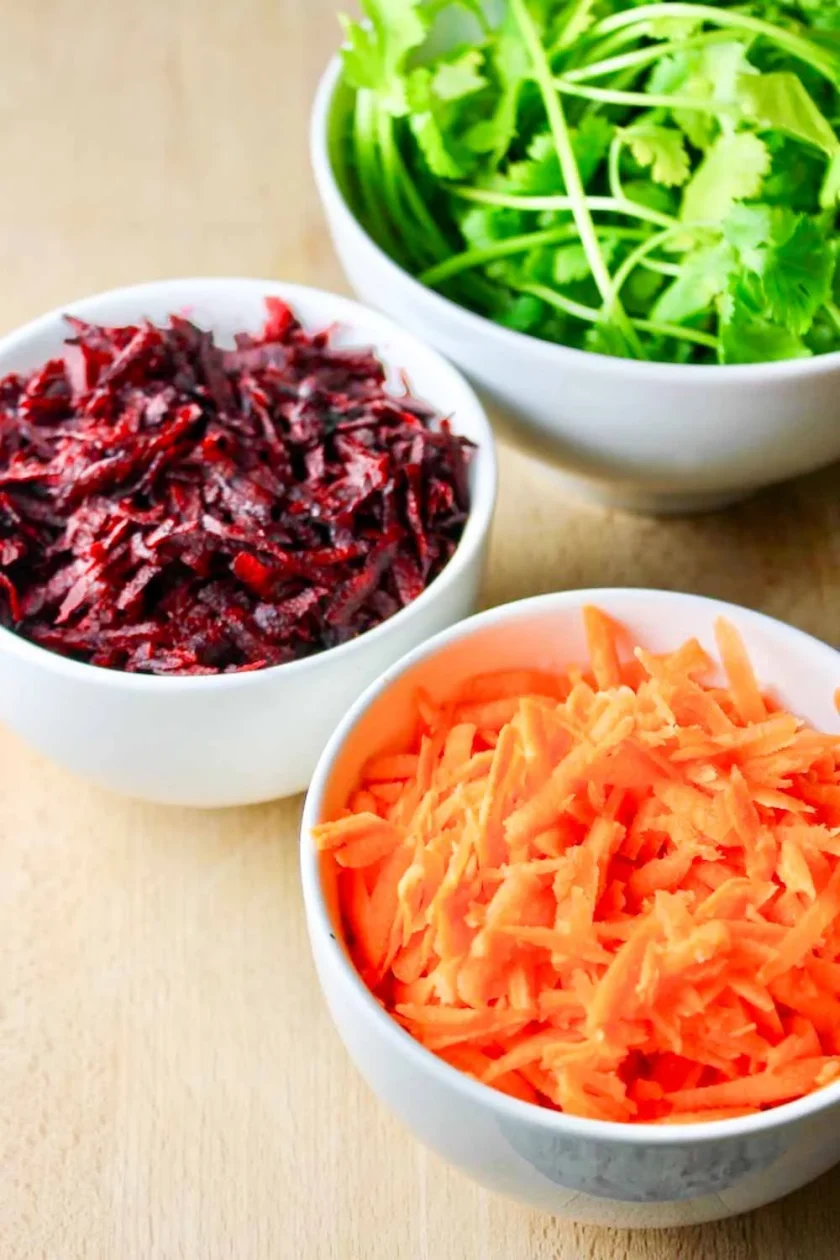
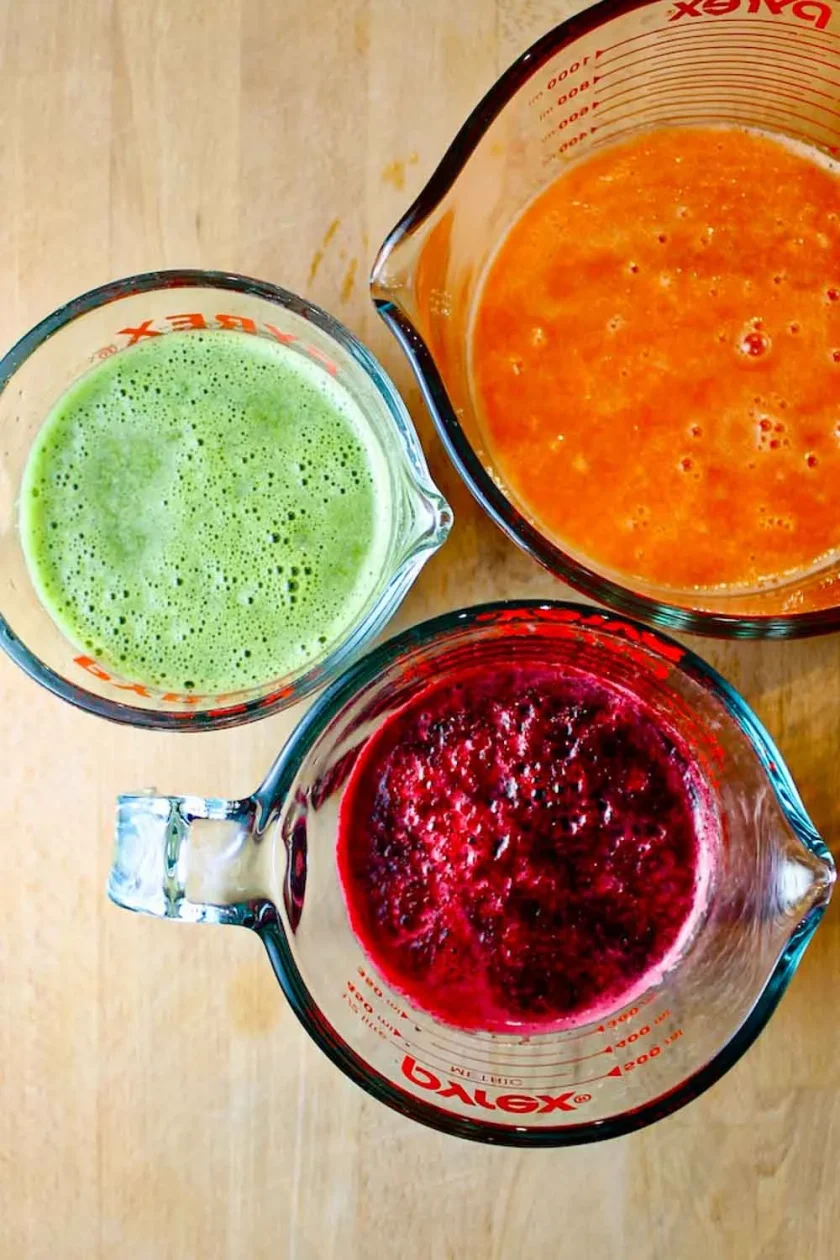
- Make the vegetable juices. Blend each juice separately with water until smooth and homogeneous.
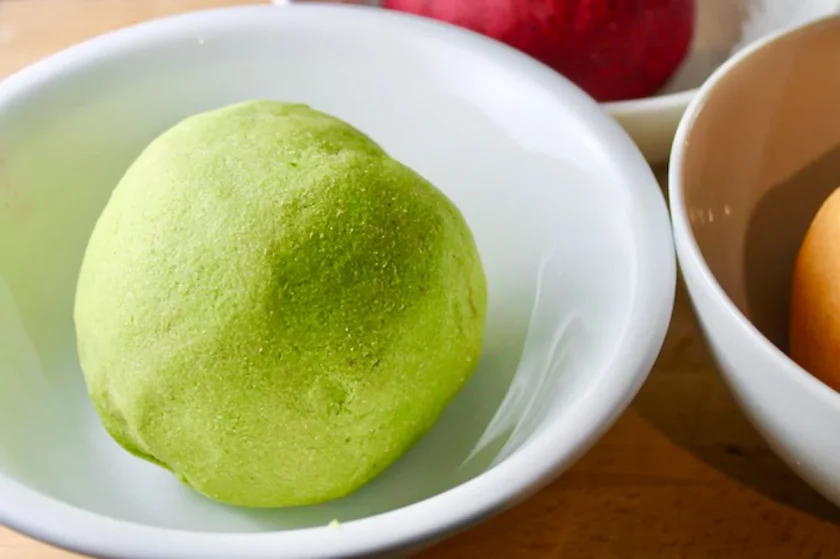
- Mix the doughs. In a separate bowl for each color, add the juice, a pinch of salt and the flour little by little. Mix until no lumps remain and knead with your hands until you get a soft, uniform dough. Let it rest for a few minutes.
- Shape and cook. Roll the dough into balls, then flatten them with your hands to the thickness of a classic arepa. Not sure how to get the perfect shape? My post on telita-style arepas walks you through the technique in detail. Cook them on a preheated greased griddle or skillet over medium heat, flip and cook a few more minutes.
- Finish in the oven. Transfer the arepas to a preheated oven and bake until they start to puff up. This is the step that guarantees they’re fully cooked through with a perfect texture.
💡 In the video that goes with this recipe I didn’t include the oven step — back then I used to skip it. Today I’m convinced it makes all the difference. I highly recommend it.
FAQs
Did you know…?
ts owe their intense red color to betalains, a group of natural pigments studied for their antioxidant properties and potential to reduce inflammation. Unlike many other plant pigments, betalains are water-soluble — which is why they stain water, dough and everything they touch. And it’s exactly what gives beet arepas that spectacular fuchsia color that needs absolutely no artificial dye.
Fuente: USDA FoodData Central, 2024.
If you enjoyed this recipe, subscribe to my YouTube channel for more delicious ideas, and check out my Amazon store for my favorite kitchen tools and ingredients.
Venezuelan Veggie-Colored Arepas Recipe
Ingredients
For the cilantro arepas
- 1 1/3 cups water 315 ml
- 1 bunch fresh cilantro (stems included)
- 1 pinch salt
- 1 cup arepa flour (Harina P.A.N.) 130 g
For the carrot arepas
- 1 1/3 cups water 315 ml
- 1 cup carrots, grated 110 g
- 1 pinch salt
- 1 cup arepa flour (Harina P.A.N.) 130 g
For the beets arepas
- 1 1/3 cups water 315 ml
- 1 cup beets, grated 135 g
- 1 pinch salt
- 1 cup arepa flour (Harina P.A.N.) 130 g
Instructions
For the cilantro arepas
- IPlace the water and cilantro in a blender. Blend until smooth.
- Pour the cilantro juice into a bowl and add the salt. Add the flour little by little, mix until no lumps remain and knead with your hands until you get a soft, uniform dough. Let rest 5 minutes.
For the carrot arepas
- Place the water and grated carrot in a blender. Blend until smooth.
- Pour the carrot juice into a bowl and add the salt. Add the flour little by little, mix until no lumps remain and knead with your hands until you get a soft, uniform dough. Let rest 5 minutes.
For the beet arepas
- Place the water and grated beet in a blender. Blend until smooth.
- Pour the beet juice into a bowl and add the salt. Add the flour little by little, mix until no lumps remain and knead with your hands until you get a soft, uniform dough. Let rest 5 minutes.
To cook the arepas
- Preheat a budare, griddle or skillet over medium heat. Grease very lightly.
- Roll 5 balls of dough in each color. Using the palms of your hands, shape them into discs approximately ½ inch (1.3 cm) thick.
- Place the arepas on the hot griddle and cook for 5 minutes, until golden on the bottom.
- Flip and cook 3-4 minutes more.
- Transfer to a preheated 350°F (175°C) oven and bake 3–5 minutes, until they start to puff up.
- Serve hot with your favorite filling.
Video
Nutrition
Notes
- Nutritional values are approximate and were automatically calculated by WordPress Recipe Maker. They may vary depending on the specific ingredients and brands you use.
- If the dough cracks when shaping, add a little more juice or wet your hands before kneading.
- Spinach arepas have a more intense green than cilantro arepas and a milder, more neutral flavor — perfect if you’re not a cilantro fan.
- Store beet arepas separately — they stain everything they touch.
- They keep for up to 2 days in the refrigerator, tightly covered; freeze for up to 3 months.
- To reheat: covered skillet over medium heat or toaster. Never the microwave.
- Naturally gluten-free, vegan and low in calories.
- They taste even better fresh out of the oven. If you’re making all three colors at once, serve first — photograph later.
Did you make this recipe?
Tag @enrilemoine on Instagram and hashtag it #byenrilemoine. Thank you!

- Venezuelan Rice and Tuna Salad Recipe - June 29, 2026
- Classic Torta Caprese Recipe: Dense, Fudgy, and Gluten-Free - June 14, 2026
- Venezuelan Plantain Arepas with White Cheese Recipe - June 10, 2026

Hello, I made these arepas and had to adjust the Harina PAN to 2 cups instead of one. When you blend 1 cup of beets or carrots, which have a lot of moisture, to 1 1/3 cups of water, you end up with 2 cups 1/4 of pulp juice. The consistency is runny.
Hi Miranda. I’m trying to understand what happened with your dough. Once veggies and water are processed in the blender, I measure 1 1/3 cup of liquid and add 1 cup of arepa flour. Once everything is combined, I let the dough stand for 5 minutes. That gives the dough the right consistency to form the arepas.
There’s something so appetising about food that looks so colourful. We’ll have to give these a try.
Thank you! You will love these ones, Jennifer!
Those veggie colored arepas are the most beautiful I have seen lately around here! Definitely the beet and spinach are my thing, should give it a try 🙂
Yesssss! You’ll love them Estefanía de Sitges.
These veggie colored arepas look delicious! My husband and I have arepas for breakfast every weekend.
That’s great! We have arepas at least twice a week. Thanks for stopping by Fatima.
O wow these look too delicious and yummy not to try! I love that they are healthy and kid friendly
Yes they are!
Oh my goodness those look SO good. I would love to make them for my husband sometime. Thanks so much for sharing this with all of us!
Thank you Krysten!
These look so beautiful! Your food photography game is on point and this recipe sounds so good.
Thank you Sophia!
Looks delicious. I love that is naturally colored with veggies. No artificial colorings and unhealthy stuff. Great!
Yessssss! Thanks for stopping by Natalie.
I have a Colombian friend that makes arepas, but I have never seen veggie ones. These look amazing!
I love Arepas! These look delicious and I love the fun colors! I will make these with my daughter soon.
Thank you Jessica. I bet she will love them
These are so pretty! And what a great way to sneak in some veggies into the kids’ diet. I’ve never had arepas, but now I want to try them.
They are wonderful for picky eaters! The taste, but that of the cilantro ones, is pretty neutral. You can make them with spinach, Holls. Thanks for stopping by.
I will be making these as they look so yummy. I have some masa flour in my freezer leftover from when I made tamales.
Tara masa for tamales is different than masa for arepas. In this post you see how the Harina PAN looks –> https://enrilemoine.com/en/2011/03/24/traditional-venezuelan-arepas-recipe/
I have not heard of these before but I would love to give them a try and I love how colourful they are as well. There really is something about colourful food.
I couldn’t agree more with you Sarah. Thanks for stopping by.
I have never made these before, but I am going to try this recipe this weekend! Using different veggies for coloring is a great concept.
Thank you Aaron!
I hadn’t heard of these before. I’m curious now! Not only do they sound tasty, but they look pretty!
Amber you can open them like a sandwich and fill them with your favorite cheese, meat, salad. Imagine it’s like a taco. It goes well with everything. And it’s gluten-free!
Those arepas look perfect! I’m definitely pinning these to try later on. Yum!
Thank you Lisa!
So so yummy… definitely going to try this soon. Thanks for sharing!
I guarantee you’ll love them!
Oh my goodness. These look so beautiful and delicious. It would be a healthy option for our boys to get their veggies.
Julia, they are perfect to have with any protein inside! Thanks for stopping by.
Seguí tu receta y las hice jeje creo que sí me quedaron bien! Muchas gacias por la receta 🙂 estoy felz, me encantan las arepas!!
Yayyyyyy! Gracias mi Gaby! You’re the best!
Me parece una receta súper original, muy vistosa y colorida. Este finde haré mis primeras arepas multicolores =)
Yayyyyy Diana. These veggie colored arepas are really good and healthy!
Enri, si las arepas normales me encantan estas ya me parecen una pasada. Nunca dejas de sorprenderme. Gracias por dar color a un plato maravilloso
Veggie colored arepas? Son una maravilla y la mar de saludables!
Pensaba que sería más difícil ! A mis hijos creo que les pueden encantar estas arepas multicolores. Muchas gracias enri!